Press release —
Three Northumbria University pioneers named among the UK’s 50 Future Innovators
An energy efficient cooling system, fully recyclable wind turbine blades and a new breast imaging system that could help detect cancers earlier are the innovations behind three Northumbria University figures named in a new ‘power list’ of future-shaping technologies at universities.
Professor Muhammad Wakil Shahzad, Professor Matthew Unthank and Dr Arnab Basu have all been recognised for their work in a list of the UK’s 50 Future Innovators, launched today by Universities UK (UUK), which represents the higher education sector. The list aims to highlight and celebrate just some of the people linked with universities whose work is making an impact and changing lives.
Of the 50 researchers, founders and artists recognised from every nation and region of the UK, four were from universities in the North East. Three of those four have links to Northumbria University. They were chosen from more than 300 nominations by an independent panel of expert judges, including technology entrepreneur Baroness Martha Lane Fox, Chief Executive of Arts Council England Dr Darren Henley CBE and former Chief Executive of UK Research and Innovation (UKRI) Professor Dame Ottoline Leyser.
50 Future Innovators has been unveiled to inspire the next generation of innovators and to unlock fresh investment into the world-changing ideas coming from universities in every part of the UK. It forms part of UUK’s work to help double external investment into university innovation to £100 billion by 2035, and UUK is calling on government, businesses and investors to back innovation where it begins.
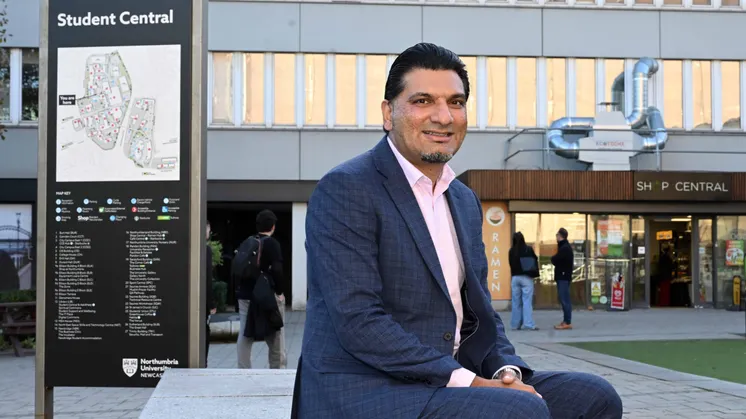
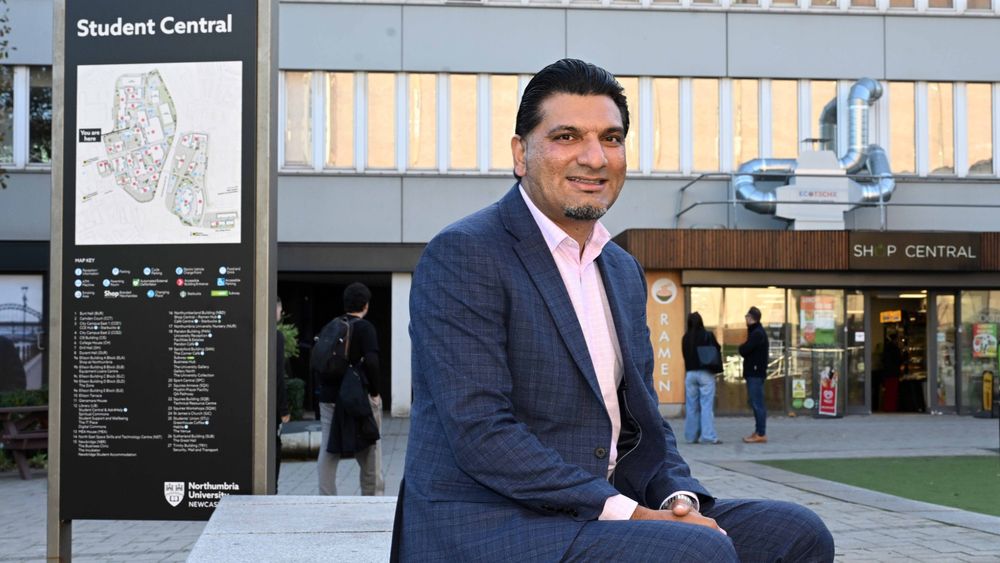
Professor Muhammad Wakil Shahzad
Muhammad Wakil Shahzad is a Professor in Mechanical Engineering at Northumbria University where he leads the Clean Resources Engineering Lab (CREL). Over the past three years, he has taken his Optimum Air Conditioning technology from concept to commercial-scale demonstration. This has been achieved with support from Northumbria University, the Northern Accelerator collaboration of five universities to support research commercialisation and the Innovation-to-Commercialisation of University Research (ICURe) training programme run by Innovate UK. Through the S2Cool project, funded by UKRI’s Ayrton Challenge Programme which aims enable a transformative transition to low-carbon energy systems in developing countries, he is accelerating international demonstration of this advance cooling system.
Unlike conventional air conditioning, it works without energy-hungry compressors or harmful chemical refrigerants, sharply cutting energy and running costs. It could provide affordable, life-saving cooling for homes, schools and hospitals in hot regions, reduce food waste through better cold storage and cut the energy used to cool data centres. This year alone, Professor Shahzad and his team have won Green World Awards for innovation and sustainability and have been named among the finalists of the Green Gown Awards for research with impact.
Professor Shahzad said: “University transformed my journey from an academic researcher into an inventor, entrepreneur and innovation leader. It gave me the freedom to think boldly, challenge conventional approaches and turn research into real-world solutions. From developing sustainable cooling and clean-water technologies to building international collaborations and a university research translation, my experience has shown me that universities are not simply places of learning, they are powerful engines for innovation, opportunity and positive global change.
“My ambition is to make sustainable cooling affordable and accessible to everyone, particularly vulnerable communities facing extreme heat, while reducing energy consumption and protecting our planet. I believe the true success of innovation lies not in what we discover in laboratories, but in the lives, we improve through real-world impact.”
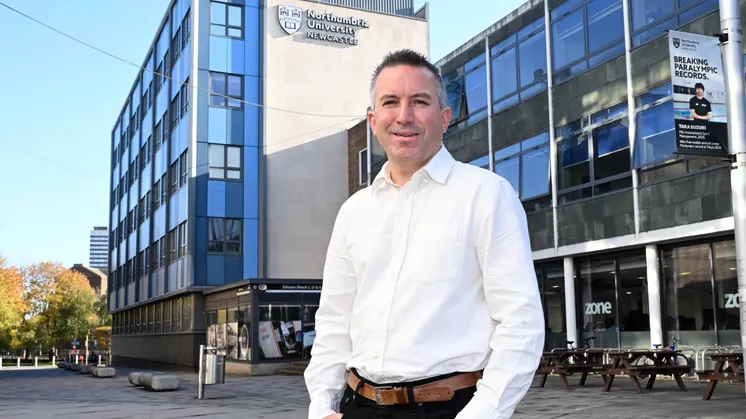
Professor Matthew Unthank
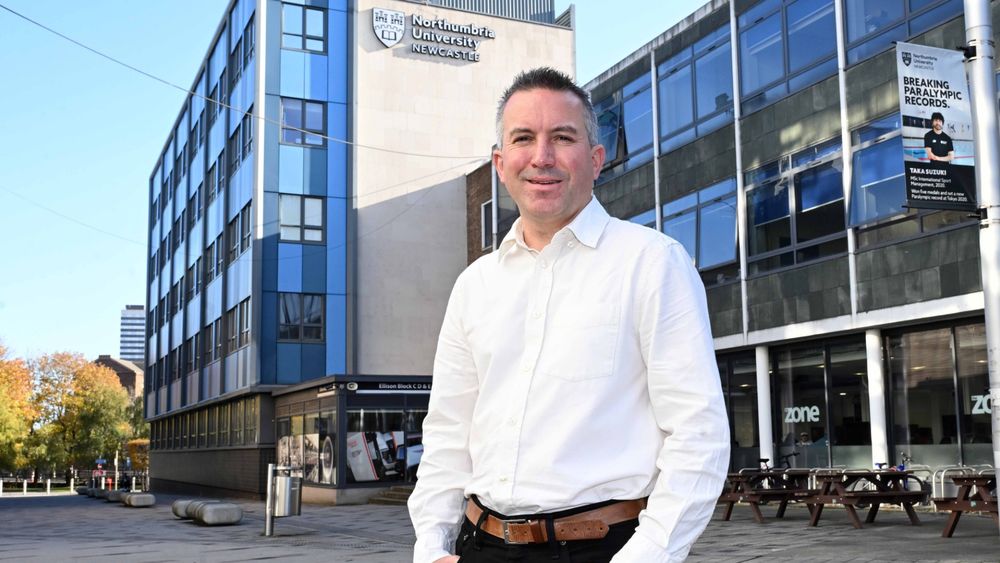
Matthew Unthank is Professor of Chemistry at Northumbria University where he is a founder member of the Synthesis and Polymer Innovation Group at Northumbria (SPIN). His research is focused on the development of sustainable materials, coatings and polymers to accelerate academic and industrial innovation. Building on work published in 2023 and supported by Northumbria University’s polymer research facilities, as well as the Northern Accelerator and Engineering and Physical Sciences Research Council (EPSRC) Research in Residence programmes, he has developed a new type of polymer that can be used to make recyclable versions of polymer-fibre composites, such as those used in wind turbine blades, aircraft and many other applications.
Structures made from polymer-fibre composites often end up in landfill, as current recycling strategies destroy the polymer and do not recover the costly carbon fibre in a reusable state. His material allows both the resin and carbon fibre to be recovered and genuinely reused, tackling a growing waste problem in advanced materials and giving valuable feedstock materials the chance to be reused and recycled. Professor Unthank also co-leads a new national Network+ in advanced surface technologies, led by Newcastle University and Northumbria University, in partnership with Sunderland Software City, which will help develop the sustainable coatings and surfaces of the future. The network, known as Surfaces for a Sustainable Future (S4SF) EPSRC Network+, was launched in October 2026 after securing £1.38 million in funding from the EPSRC.
Professor Unthank said: “Northumbria gave me the freedom to bring my industrial background in polymers, coatings and chemical manufacturing into an academic setting, and to build a team around real-world problems. Through SPIN, our researchers work directly with a wide range of companies, from small regional businesses to large international organisations, turning ideas from the lab into sustainable polymers that industry can actually use. Seeing students and early career researchers grow through that work is what motivates me most.”
Dr Arnab Basu MBE DL FREng
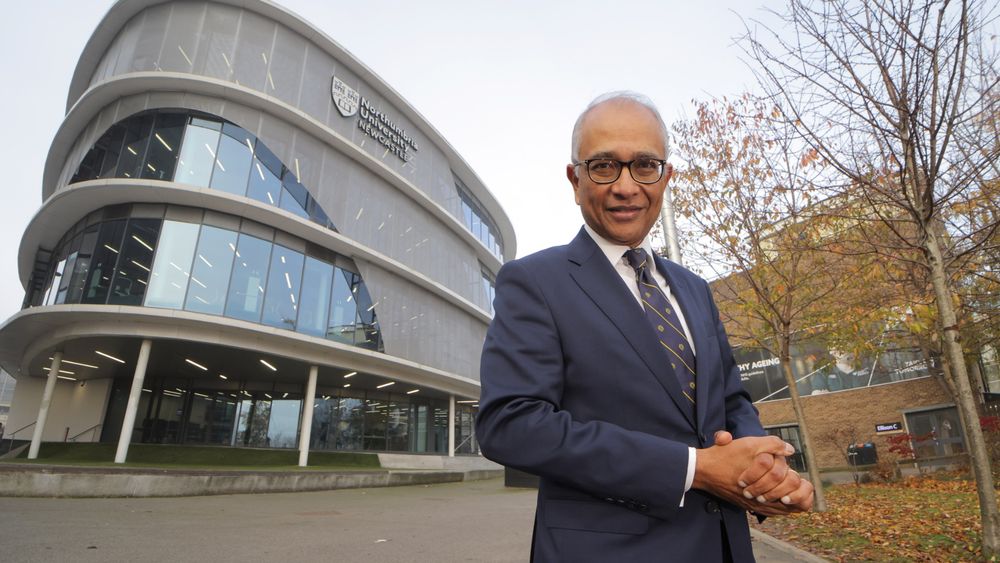
Arnab Basu is CEO of Kromek Group plc, a leading supplier of radiation detectors. A Northumbria University engineering graduate, he co-founded the company as a Durham University spinout. Since 2023 his team has developed a new breast imaging system, now moving towards clinical trials at Newcastle Hospitals. Up to 40 per cent of women have dense breast tissue, which can hide tumours on a mammogram. Kromek’s technology cuts scan times to around ten minutes with far lower radiation, and could help detect cancers earlier in women currently under-served by screening.
Dr Basu was named EY UK Entrepreneur of the Year in 2009, appointed MBE in 2014 and awarded an Honorary Doctorate of Science by Northumbria University in 2016, amongst other honours. He is also a supporter of STEM scholarships as a donor to the University’s Higher Education Without Barriers Fund, which provides a range of financial initiatives, mental health and wellbeing services and community-based outreach projects to enable students from all backgrounds – the next generation of innovators – to study and succeed at Northumbria.
Dr Basu said: “It’s an honour to be recognised among Universities UK’s 50 Future Innovators. Universities play a vital role in turning ambitious ideas into reality, and Kromek’s journey from university research to an international technology business is a great example of that. Today, our technologies are helping doctors detect diseases earlier and protecting people from serious threats around the world. Seeing scientific discoveries translated into innovations that can improve and save lives is immensely rewarding, and I hope our story inspires others to pursue their own ideas.”
Professor Louise Bracken, Pro Vice-Chancellor for Research and Knowledge Exchange at Northumbria University said: “All three of these talented innovators are connected to Northumbria University in a meaningful way, and together they show that talent is thriving in the North East region. Their recognition is a real honour for the University, and a moment to pause and celebrate the people, ideas and partnerships that make our city and the wider region such a great place to innovate.”
Dame Chi Onwurah, MP for Newcastle upon Tyne Central and West and Chair of the Science and Technology Commons Select Committee, said: “The North East has a long and proud history of leading innovation, so I’m delighted to see three exceptional talents from Northumbria University continuing that tradition. It makes me very proud to see such talent recognised in my own constituency. Being named among the UK’s 50 Future Innovators is a brilliant example of the ideas and ability we have right here in Newcastle, and it shows the impact Northumbria University has on our community, our economy and the next generation.”
Malcolm Press, President of Universities UK, commented “UK universities sit at the cutting edge of the breakthroughs that define our age, from life-saving treatments and clean energy to artificial intelligence. The innovations coming out of our world-leading universities anchor Britain’s leadership in the industries that will power the global economy.
“However, too often the jobs and prosperity these innovations create are not felt in the regions where they began. Working with investors, government and regional partners, we want to change that and answer the Prime Minister’s call to make all of the UK the best place in the world for innovative businesses to start, scale and stay.
“These 50 future innovators, supported by universities the length and breadth of the UK, are just the tip of the iceberg. By celebrating these individuals and their innovations we hope to inspire the next generation of founders right across the country.”
The full list of 50 Future Innovators is online at https://future.universitiesuk.ac.uk/50-future-innovators
ENDS
Notes to editors
Image captions: Professor Muhammad Wakil Shahzad, Professor Matthew Unthank and Dr Arnab Basu.
About 50 Future Innovators
50 Future Innovators is a UK-wide celebration, published by Universities UK, of individuals leading current, innovative work which is connected to a UK university in a meaningful way.
How the 50 were selected
Every nomination was assessed against four criteria: groundbreaking (work that shifts what is possible), contemporary (work that has emerged within the last five years), university-linked (a UK university was instrumental in the work) and impactful (creating real and meaningful change in people’s lives).
Universities UK’s editorial team reviewed every submission and developed a shortlist. A panel of five independent expert judges then scored the shortlisted nominations against the four criteria. Each nomination was scored independently by two judges, and the scores were brought together to determine the final 50.
The judges were Dr Darren Henley CBE (Chief Executive, Arts Council England), Dr Anne-Marie Imafidon MBE (CEO and co-founder, Stemettes), Baroness Beeban Kidron OBE (founder,5Rights Foundation), Baroness Martha Lane Fox (co-founder, lastminute.com) and Professor Dame Ottoline Leyser DBE FRS (Regius Professor of Botany, University of Cambridge, and former Chief Executive of UKRI).
About Future Universities
Future Universities is Universities UK’s campaign making the case that there is no national renewal without strong universities.
About Northumbria University
Northumbria is a research-intensive university that unlocks potential for all, changing lives regionally, nationally and internationally. Two thirds of Northumbria's undergraduate students come from the North East region and go into employment in the region when they graduate, demonstrating Northumbria's significant contribution to social mobility and levelling up in the North East of England. Find out more at www.northumbria.ac.uk
Topics
Categories
Regions
UNIVERSITY OF THE YEAR (Times Higher Education Awards, 2022)
RESEARCH UNIVERSITY OF THE YEAR (Daily Mail University Guide, 2024)
MODERN UNIVERSITY OF THE YEAR (Daily Mail University Guide, 2024 and The Times and Sunday Times Good University Guide, 2025).
Northumbria is a research-intensive university that unlocks potential for all, changing lives regionally, nationally and internationally.
Two thirds of Northumbria's undergraduate students come from the North East region and go into employment in the region when they graduate, demonstrating Northumbria's significant contribution to social mobility and levelling up in the North East of England.
Find out more at www.northumbria.ac.uk
--- Contact media.communications@northumbria.ac.uk with any media enquiries or interview requests ---