Press release —
New scientific review involving Northumbria University researchers identifies Antarctic coastal blind spots limiting sea level projections
A new international, community-led, scientific review warns that major gaps in knowledge along Antarctica’s coast are now one of the biggest obstacles to reliably predicting future global sea level rise.
The paper, recently published in American Geophysical Union (AGU)’s Reviews of Geophysics, synthesises current understanding of how ice, ocean, atmosphere, and the solid Earth interact in Antarctica’s coastal zone, and highlights key knowledge gaps and the need for improved observations at a pan-Antarctic scale.
The review was written by 80 scientists across 17 countries, with expertise in glaciology, oceanography, geophysics, and atmospheric science, coordinated through the Scientific Committee on Antarctic Research (SCAR) RINGS Action Group. The RINGS group is also endorsed by the Council of Managers of National Antarctic Programs (COMNAP), which provides logistics knowledge for efficient survey planning and better coordinate support when it is provided by national Antarctic programs.
The paper brings together existing observations, models, and theory to highlight how addressing knowledge gaps along Antarctica’s coast will continue to improve estimates of its ice loss and future sea-level rise. Dr Inès Otosaka, Dr Tom Slater and Professor Andy Shepherd from the UK Centre for Polar Observation and Modelling (CPOM), based within the School of Geography and Natural Sciences at Northumbria University, are among the co-authors.
CPOM is a partnership of six universities and the British Antarctic Survey (BAS), primarily funded by the National Environment Research Council (NERC), to provide national capability in observation and modelling of the processes that occur in the Polar regions of the Earth.
Dr Slater, explained that the Northumbria CPOM team contributed insights on Antarctic ice sheet mass balance – the difference between the snow Antarctica gains and the ice it loses through glaciers flowing into the ocean – and acknowledged that further international coordination would be key to moving forward.
"Advances in satellite technology allow us to reliably track Antarctic mass change. But satellites cannot see beneath the ice to the bedrock below or to the ocean cavities under the floating ice shelves, both of which ultimately control how fast ice flows into the sea,” said Dr Slater. “This gap between what we can measure from space and what ice sheet models need to know about Antarctica's coast is one of the primary sources of uncertainty in sea level projections. The good news is that this is a solvable problem. Internationally coordinated surveys, exactly like those set out by the RINGS report, can close these knowledge gaps. This matters at a time when tighter Antarctic sea level projections are essential for planning effective coastal adaptation and defence strategies."
A critical control point for sea level rise
The Antarctic coastal zone is not simply the edge of the continent. It is a tightly coupled system where grounded ice meets the ocean, and where small changes can have outsized consequences. Processes occurring near the grounding zone – the point where ice lifts off the bed and begins to float – can regulate ice discharge or, under certain conditions, trigger feedbacks that accelerate ice loss.
Observations over recent decades show that Antarctic mass loss has increased. The most rapid changes are driven by interactions between the ice and surrounding ocean, and by ice flow at the margins of the ice sheet, rather than surface melting alone. Yet key coastal conditions remain poorly mapped.
The review identifies persistent gaps in direct observations of coastal bed topography and sub–ice shelf cavities. Because ice sheet models are highly sensitive to conditions at the coast, even advanced models can produce misleading results when this data is missing or poorly constrained.
While satellite observations provide powerful measurements of ice motion and surface change, they cannot observe the bedrock under ice from space.
A roadmap for coordinated action
Because no single nation can achieve comprehensive coverage alone, the authors emphasise that international coordination is essential.
“Uncoordinated surveys risk leaving gaps or duplicating effort. This paper provides an evidence-based framework to support coordinating RINGS activities under SCAR and COMNAP, helping to build more comprehensive datasets for improved sea-level projections”, said first author of the paper and chair of the RINGS Action Group, Dr Kenichi Matsuoka, from the Norwegian Polar Institute. “Such internationally coordinated efforts can serve as a steppingstone towards the next International Polar Year 2032–2033.”
Discover more about research at Northumbria University which examines the future of ice on Earth.
FURTHER INFORMATION:
Visit the Northumbria University Research Portal to find out more about information about the work of Dr Tom Slater, Dr Inès Otosaka and Professor Andy Shepherd.
Toward an improved understanding of the Antarctic Coastal Zone and its contribution to future global sea level was published in American Geophysical Union (AGU)’s Reviews of Geophysics on 2 September 2026.
DOI: 10.1029/2022RG000803
ENDS
Notes to editors
Image captions:
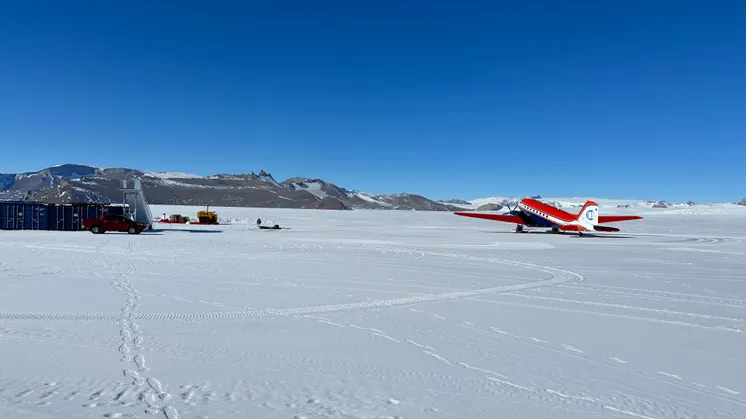
1 - The goal of the RINGS Action Group is to refine estimates of Antarctica's contribution to sea-level rise today and in the future. Photo by Dr Kenichi Matsuoka.
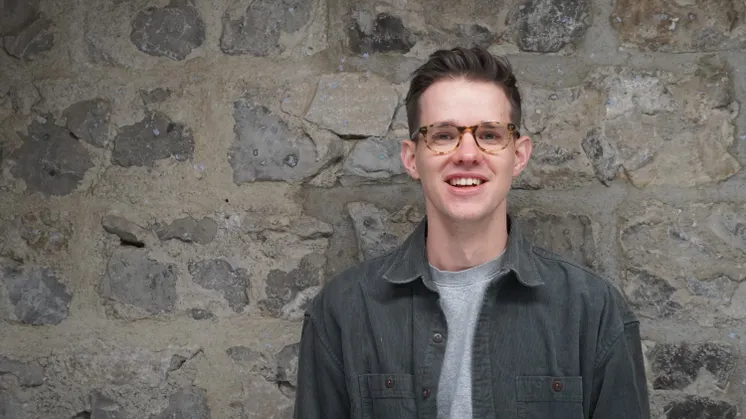
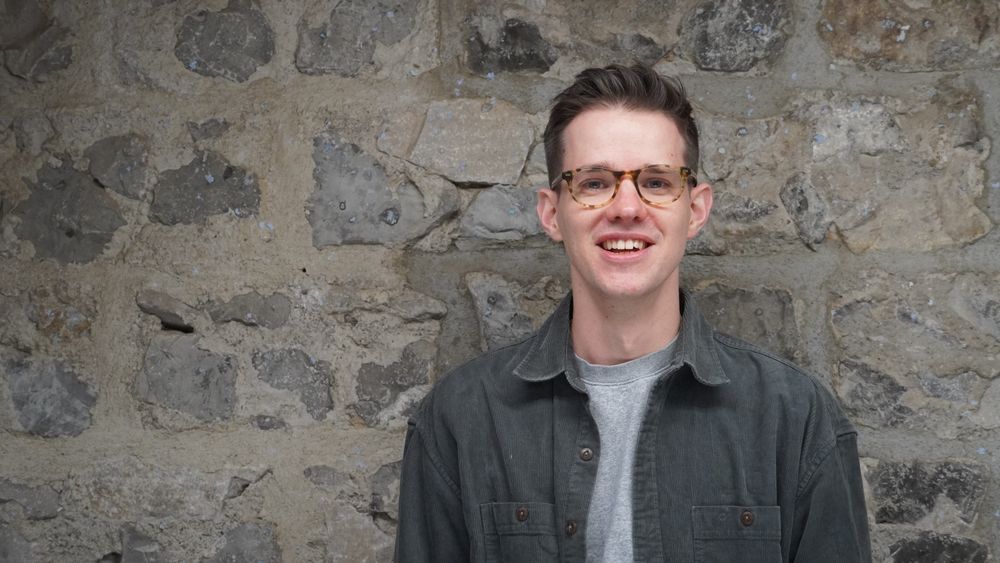
2 - Dr Tom Slater, CPOM Research Fellow, Northumbria University.
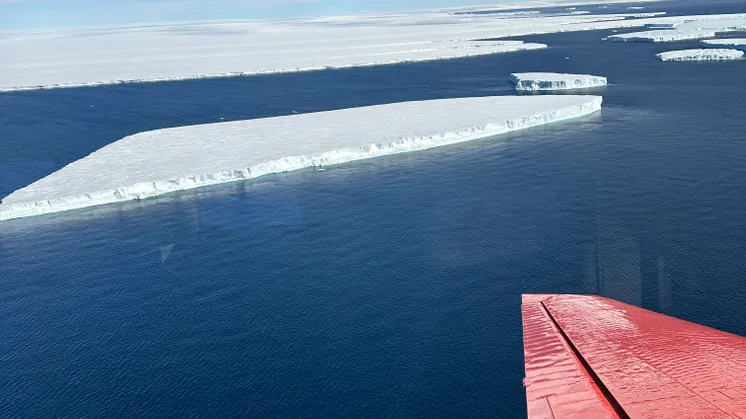
3 - Radar measurements of coastal ice all around Antarctica will be taken from the air in an effort to get more accurate calculations and reduce uncertainty about future global sea levels. Photo by Dr Kenichi Matsuoka.
Topics
Categories
Regions
UNIVERSITY OF THE YEAR (Times Higher Education Awards, 2022)
RESEARCH UNIVERSITY OF THE YEAR (Daily Mail University Guide, 2024)
MODERN UNIVERSITY OF THE YEAR (Daily Mail University Guide, 2024 and The Times and Sunday Times Good University Guide, 2025).
Northumbria is a research-intensive university that unlocks potential for all, changing lives regionally, nationally and internationally.
Two thirds of Northumbria's undergraduate students come from the North East region and go into employment in the region when they graduate, demonstrating Northumbria's significant contribution to social mobility and levelling up in the North East of England.
Find out more at www.northumbria.ac.uk
--- Contact media.communications@northumbria.ac.uk with any media enquiries or interview requests ---