Press release —
New Doctoral Training Programme will tackle key polar science questions with a reduced carbon footprint
The Net Zero Polar Science (NZPS) Doctoral Training Programme (DTP) has welcomed its first cohort of PhD researchers, marking the launch of a new UK-based multi-institute initiative to develop the next generation of scientists to deliver high-impact environmental science with a reduced carbon footprint.
NZPS-DTP, led by the UK Centre for Polar Observation and Modelling (CPOM) based at Northumbria University, with Lancaster University, the University of Leeds, the University of Reading, and the British Antarctic Survey (BAS) as core partners, addresses grand polar science challenges more sustainably, involving the evaluation, innovative use, and creation of low-carbon technological solutions across all areas of environmental science. The programme aims to equip its students with expertise urgently needed to plug the UK's green skills gaps in academia, industry, and government.
The programme is primarily funded by a Natural Environment Research Council (NERC) Doctoral Focal Award which is contributing £2.6 million into the programme, with co-funding from partner universities and industrial partners, and aims to recruit 49 doctoral researchers over three annual cohorts.
Despite major advances, polar science has significant knowledge gaps owing to the difficulty of surveying remote environments, and these gaps limit our ability to make reliable future projections of the changing environment.

NZPS aims to improve understanding of lesser understood aspects of the Earth System, including submarine cavities, ice sheet grounding lines, ice cliff failure, ice shelf fracture, ice rheology, mountain glacier runoff, sea ice thickness, polar ocean circulation, atmospheric rivers, primary productivity, and habitat change, and addresses questions which we need to answer in order to produce more accurate projections of future environmental scenarios.
The solutions we need for these knowledge gaps must be sustainable and low carbon as the United Kingdom works to reach Net Zero by 2050.
13 PhD researchers make up the first cohort, beginning their studies in early October 2026 and focusing on a range of new and emerging technologies, including monitoring of the polar regions using drones, autonomous vehicles, multi-frequency satellite remote sensing, wildlife monitoring, machine learning, digital twins and using advanced modelling (simulations).
Each PhD researcher will take up a funded work placement (typically three months) with one of the programme's 42 industry partners or external organisations, focusing on a key challenge faced by that partner. This allows researchers to apply their expertise in a real-world setting, build networks, and prepare for a career beyond academia. Potential industry and external partners include organisations such as Limosaero, a UK-based aerospace company combining R&D consultancy in drones with the in-house design, build and operation of a solar-powered uncrewed aircraft, which it offers as a data-collection service.
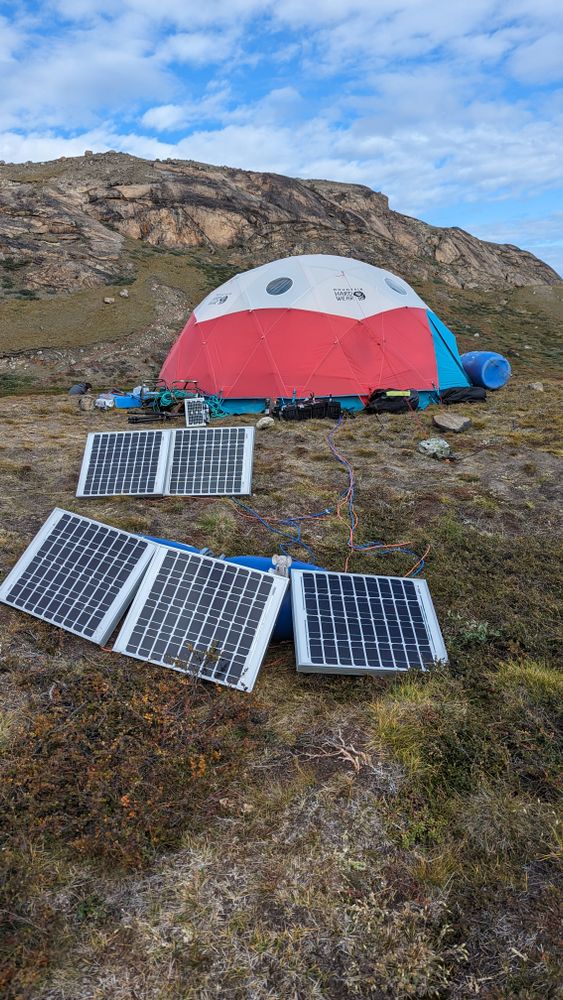
Dr Sammie Buzzard, a member of the NZPS Leadership Team at Northumbria University, said: "Since the satellite era began, our understanding of the polar regions has improved considerably. However, there are still many uncertainties, and Earth System processes we don’t fully understand. There's still lots of work needed to fully understand how these regions are changing and what this might mean for the rest of the planet. It is always a concern for environmental scientists that we do as little damage as possible to the regions we are studying. This programme not only focuses on the research, but on reducing the impacts of the science to ensure we are not contributing to the problem of climate change. This involves using new technologies such as drones, machine learning, advanced modelling and digital twins, but also re-using data we already have and rethinking how we power our science using renewable energy sources.”
Dr Hilary Costello, Limosaero Co-Founder, said: "As a company developing solar-powered UAVs with extended flight time and range, we see a strong synergy with the NZPS-DTP. Drones offer a cheap, lightweight, on demand complement to satellite data, making them invaluable for building our understanding of pressing environmental issues. We're excited to support a doctoral programme dedicated to gathering crucial scientific data sustainably, using sustainable technologies to help answer some of environmental science's most pressing questions."
Dr Charlotte Royle, a member of the NZPS Leadership Team at Northumbria University, said: "It is estimated that the UK has a shortfall of around 200,000 workers to meet the UK Net Zero target. As we work towards the UK’s Net Zero target of 2050 the UK economy needs STEM graduates trained in green skills. This programme aims to help fill that skills gap, while also ensuring crucial science questions are answered. We ensure that all of our students have the opportunity to work with industrial partners and our programme is tailored to equip them with the skills they need for careers in a range of sectors."
NZPS sits within Northumbria's wider commitment to environmental leadership. The University is the only UK institution leading doctoral training programmes funded by both the Engineering and Physical Sciences Research Council (EPSRC) and NERC with an explicit net-zero mandate. Alongside NZPS, Northumbria leads the £11 million Renewable Energy Northeast Universities (ReNU+) centre for doctoral training, together training over 160 researchers in renewable energy, life cycle thinking, circular economy principles and sustainable environmental science. Partners across both programmes include Siemens, Airbus, Johnson Matthey and the Offshore Renewable Energy Catapult.
Topics
Regions
UNIVERSITY OF THE YEAR (Times Higher Education Awards, 2022)
RESEARCH UNIVERSITY OF THE YEAR (Daily Mail University Guide, 2024)
MODERN UNIVERSITY OF THE YEAR (Daily Mail University Guide, 2024 and The Times and Sunday Times Good University Guide, 2025).
- Northumbria is a research-intensive university that unlocks potential for all, changing lives regionally, nationally and internationally.
- Two thirds of Northumbria's undergraduate students come from the North East region and go into employment in the region when they graduate, demonstrating Northumbria's significant contribution to social mobility and levelling up in the North East of England.
- NZPS is a Doctoral Training Programme with PhD research opportunities at Northumbria University, Lancaster University, the University of Leeds, the University of Reading, and the British Antarctic Survey (BAS), collaborating with 42 external partners. Find out more about NZPS – nzps-dtp.ac.uk
- NZPS sits within Northumbria's wider commitment to environmental leadership. The University is the only UK institution leading doctoral training programmes funded by both the Engineering and Physical Sciences Research Council (EPSRC) and NERC with an explicit net-zero mandate. Alongside NZPS, Northumbria leads the £11 million Renewable Energy Northeast Universities (ReNU+) centre for doctoral training, together training over 160 researchers in renewable energy, life cycle thinking, circular economy principles and sustainable environmental science. Partners across both programmes include Siemens, Airbus, Johnson Matthey and the Offshore Renewable Energy Catapult.
- The UK Centre for Polar Observation and Modelling (CPOM) is a world leading research centre, funded by the Natural Environment Research Council (NERC) in partnership with the British Antarctic Survey (BAS). Led by Northumbria University, we work across 8 partner and associated universities in the UK. Find out more about CPOM – cpom.org.uk
- The Natural Environment Research Council (NERC), part of UK Research and Innovation (UKRI), is the UK’s leading public funder of environmental science, investing £330 million each year in cutting-edge research, postgraduate training and innovation in universities and research centres - https://www.ukri.org/who-we-are/nerc/
- Limosaero is a UK-based aerospace company combining R&D consultancy in drones with the in-house design, build and operation of a solar-powered uncrewed aircraft, which it offers as a data-collection service. Its expertise spans the design, build and testing of prototype aircraft, from high-altitude platforms (HAPS) to small low-altitude drones, supported by bespoke modelling and simulation in flight dynamics, structures and aeroelasticity, and energy systems. Find out more - www.limosaero.co.uk
Find out more at www.northumbria.ac.uk
--- Contact media.communications@northumbria.ac.uk with any media enquiries or interview requests ---