Press release —
Criminologist wins acclaimed Philip Leverhulme Prize to pioneer a new criminology of the offshore world
A Northumbria University criminologist has been awarded a Philip Leverhulme Prize, one of the UK’s most prestigious awards for early-career researchers whose work has had an international impact.
Dr Alexandra Hall, Associate Professor in Criminology in Northumbria’s School of Humanities and Social Sciences, is one of 30 winners of the 2026 prizes, announced across six categories today by the Leverhulme Trust. Dr Hall was selected in the Sociology and Social Policy category for her work on how illicit economies are organised, financed and embedded in the global political economy. Her research has spanned illicit markets in drugs and counterfeit goods and, more recently, freeports and Special Economic Zones (SEZs).
Each prize is worth £100,000 and can be used for any purpose that advances the winner’s research. The winners were chosen from more than 400 nominations with the prizes recognising researchers whose work has already attracted global recognition and whose future careers are exceptionally promising. The prizes commemorate the contribution to the work of the Trust made by Philip, Third Viscount Leverhulme and grandson of William Lever, the founder of the Trust.
Researching where crime, harm and the economy meet
Dr Hall’s research looks at how crime, harm and the economy are connected. Her current work focuses on freeports and SEZs, which are designated areas where the usual rules on tax, customs and regulation are relaxed to encourage trade and investment. She examines how these arrangements shape economic activity and governance, and how they can create or enable opportunities for crime and social and environmental harm.
This includes The Freeport Paradox, a project funded by the Independent Social Research Foundation, and recent research with the United Nations Office on Drugs and Crime, exploring SEZs around the world and their links to environmental crime. Dr Hall is currently writing a book based on this work.
Her earlier research has covered the online trade in counterfeit and falsified medicines, how drug and tobacco traffickers manage their finances, and the flow of counterfeit goods between the UK and China. This work went on to inform policy and regulatory developments in the UK, USA and Europe, taken up by international organisations such as the European Commission, the Organisation for Economic Co-operation and Development (OECD), Council of Europe, Europol and the United Nations Office on Drugs and Crime (UNODC). She is co-author of the books Fake Meds Online and Fake Goods, Real Money, and her work has featured in media outlets including the BBC and The Guardian.
Speaking of receiving a Philip Leverhulme Prize, Dr Hall said: “I’m absolutely chuffed, and a little stunned, to have received a Philip Leverhulme Prize. It’s a real honour. A big thanks to the reviewers, panel members and the Trust for recognising the potential of my work. I’m excited to build on my existing research, explore new directions in the study of offshore worlds and see where this next chapter takes me.”
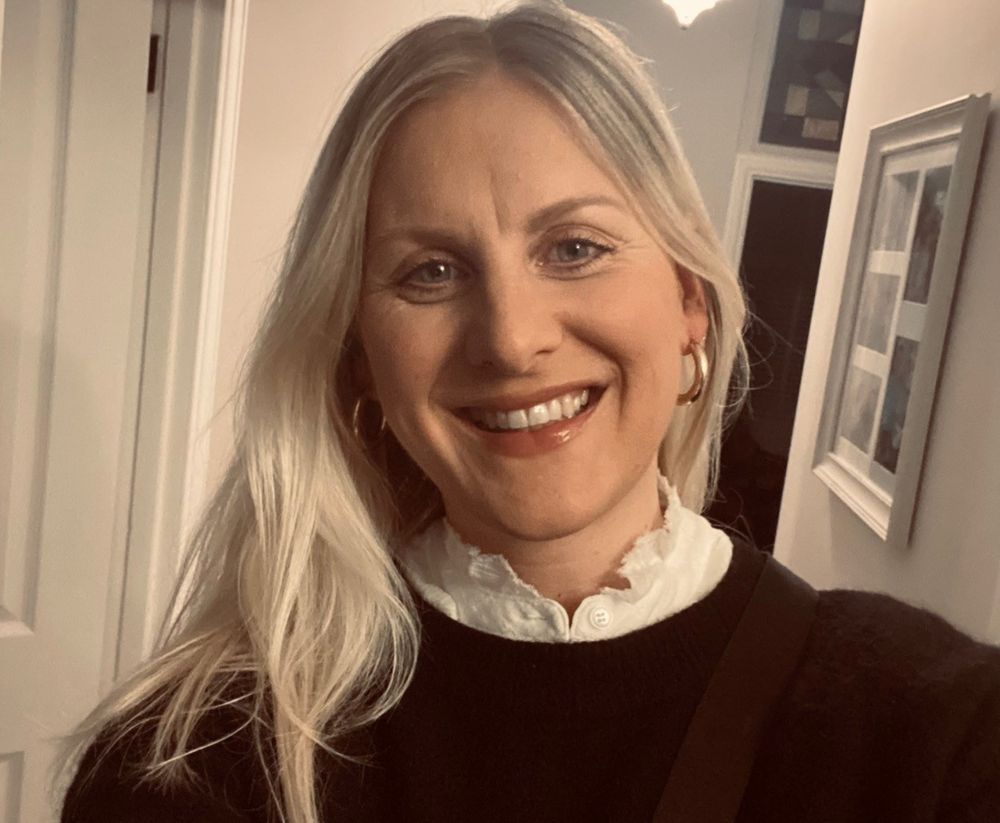
The prize will enable Dr Hall to develop a new book project establishing a criminology of the offshore world. Building on her research into SEZs, she will extend her focus to tax havens, charter cities, offshore financial centres and emerging digital jurisdictions. Combining international fieldwork with the development of new tools to map offshore spaces and their governance, the project will lay the ground for a new research agenda examining how processes of offshoring are reshaping the global geographies of crime and harm.
Professor Louise Bracken, Pro Vice-Chancellor for Research and Knowledge Exchange at Northumbria University, said: “To win any Leverhulme Prize is a clear mark of excellence, and a reflection of the quality and impact of the world-class research taking place at Northumbria. Making the Philip Leverhulme Prize list is a stand-out achievement for Dr Hall and recognition of her contribution to her field.
“Her research asks important questions about how places that operate under different rules can create opportunities for crime and harm, and what that means for the communities and environments around them. Dr Hall is a leading voice in Criminology and this prize is a richly deserved recognition of her achievements and her promise.”
Professor Anna Vignoles, Director of the Leverhulme Trust, said: “This year marks the twenty-fifth year of the Philip Leverhulme Prizes. For a quarter of a century, this scheme has attracted extraordinarily high-calibre researchers, and selecting only thirty winners is always challenging. We are immensely grateful to the reviewers and panel members who help us in our decision making, and we are extremely proud to support these researchers through the next stage of their careers.”
Visit northumbria.ac.uk/research to discover more about research at Northumbria.
ENDS
Notes to editors
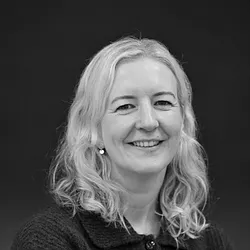
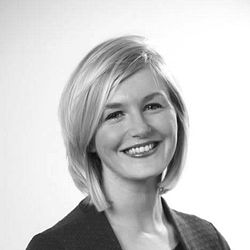
Image captions: Alexandra Hall, Associate Professor in Criminology at Northumbria University’s School of Humanities and Social Sciences.
About the Leverhulme Trust
The Leverhulme Trust is an independent charity that seeks to fund ambitious blue skies research and scholarship, which has the potential to generate new ideas and research breakthroughs that benefit society. The Trust also aims to support a diverse range of scholars in their educational endeavours. Focusing efforts mainly in the UK, which has a world-class higher education research sector. Since its foundation in 1925, the Trust has provided grants and scholarships for research and education, funding research projects, fellowships, studentships, bursaries and prizes across all academic disciplines. Today, it is one of the largest all-subject providers of research funding in the UK, distributing approximately £120 million a year.
leverhulme.ac.uk | Bluesky | LinkedIn | Media collection
About Northumbria University
Northumbria is a research-intensive university that unlocks potential for all, changing lives regionally, nationally and internationally. Two thirds of Northumbria's undergraduate students come from the North East region and go into employment in the region when they graduate, demonstrating Northumbria's significant contribution to social mobility and levelling up in the North East of England. Find out more at www.northumbria.ac.uk
Topics
Categories
Regions
UNIVERSITY OF THE YEAR (Times Higher Education Awards, 2022)
RESEARCH UNIVERSITY OF THE YEAR (Daily Mail University Guide, 2024)
MODERN UNIVERSITY OF THE YEAR (Daily Mail University Guide, 2024 and The Times and Sunday Times Good University Guide, 2025).
Northumbria is a research-intensive university that unlocks potential for all, changing lives regionally, nationally and internationally.
Two thirds of Northumbria's undergraduate students come from the North East region and go into employment in the region when they graduate, demonstrating Northumbria's significant contribution to social mobility and levelling up in the North East of England.
Find out more at www.northumbria.ac.uk
--- Contact media.communications@northumbria.ac.uk with any media enquiries or interview requests ---