


















Skip to content

News archive

  • Deep space telescope captures Neptune’s auroras for the first time

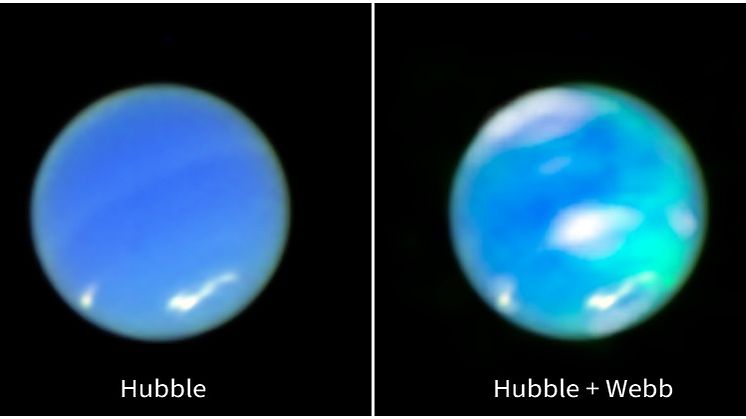
    Scientists from Northumbria University captured Neptune's auroras for the first time using NASA's James Webb Space Telescope. This groundbreaking discovery, revealing unique auroral characteristics and significant atmospheric cooling, enhances understanding of Neptune's magnetic field and its interactions with solar particles.

  • New study unveils breakthrough in understanding cosmic particle accelerators

    A new study reveals insights into cosmic particle accelerators, explaining how collisionless shock waves accelerate electrons to extreme speeds. Combining satellite data and theoretical advancements, researchers address the electron injection problem, enhancing understanding of cosmic ray origins and energy transfer in space.

  • Magnetic tornado is stirring up the haze at Jupiter’s poles

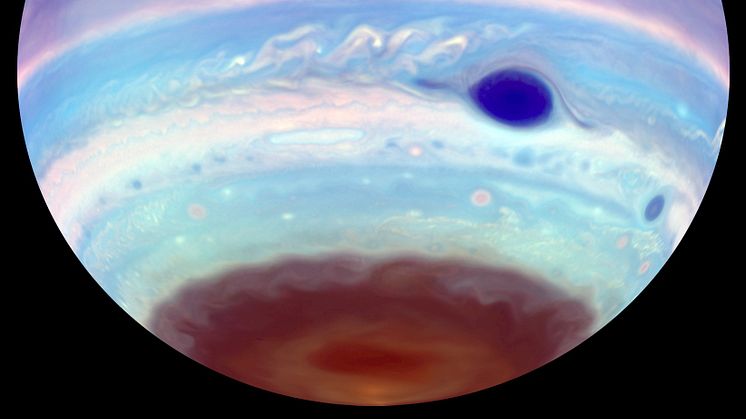
    While Jupiter’s Great Red Spot has been a constant feature of the planet for centuries, astronomers have discovered equally large spots at the planet’s north and south poles that appear and disappear seemingly at random.

  • Major boost for North East space sector following £2.5 million investment

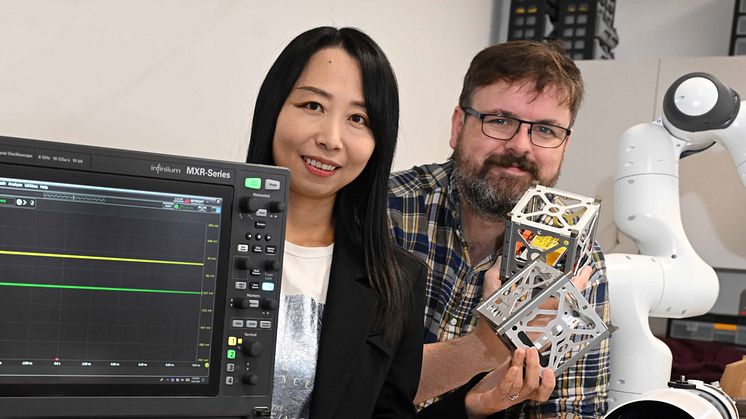
    The North East space sector has received a 2.5 million investment from EPSRC, establishing the North East Space Communications Accelerator (NESCA) to enhance research, innovation, and skills in space technology, aiming to create jobs and stimulate economic growth over four years.

  • Satellites could hold the key to keeping the lights turned on

    The SAT-Guard project aims to leverage satellite technology to enhance energy management and restore power following extreme weather events. Funded by UK Research and Innovation, it seeks to improve grid resilience and coordination of distributed energy resources across the UK.

  • First successful routine measurements of Sun’s magnetic field in the corona

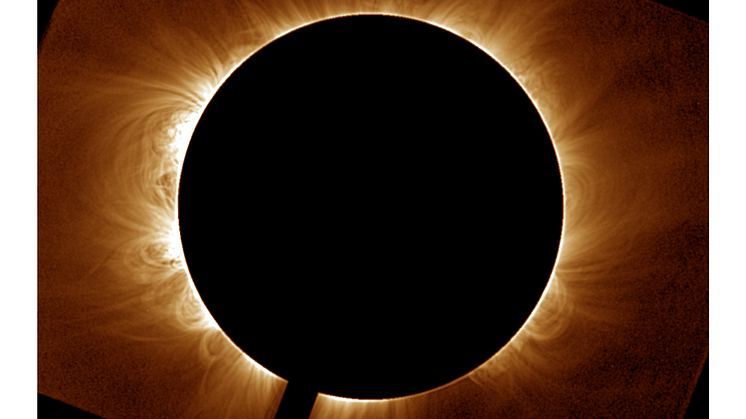
    A team of scientists have successfully carried out regular measurements of the outermost layer of the Sun’s atmosphere for the first time – giving us a much better understanding of the magnetic field within this region, known as the solar corona.
    The Sun’s magnetic field plays a key role in shaping its atmosphere, with activity such as solar eruptions and the heating of the corona to millions o

Show more