















Scaling-up global solar panel manufacturing sustainably
Pioneering research led by Northumbria University shows how the renewable energy sector can scale-up the production of solar energy technology while further reducing environmental impacts.
Researchers are set to shine a different kind of light on the farming industry after receiving funding to explore how fluorescent materials used in TV and phone screens can be used to detect the presence of pesticides and herbicides in food production.
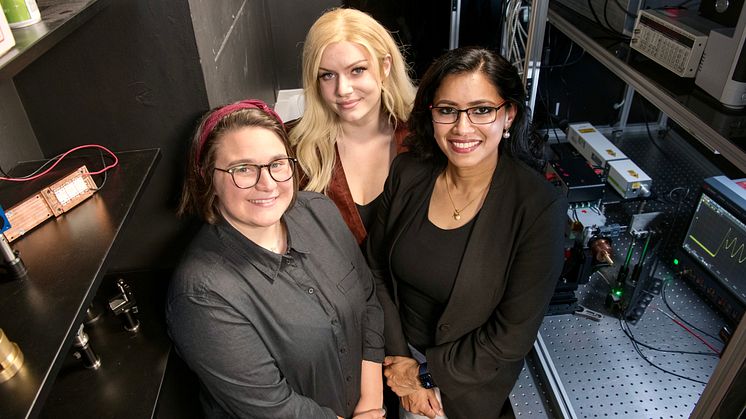
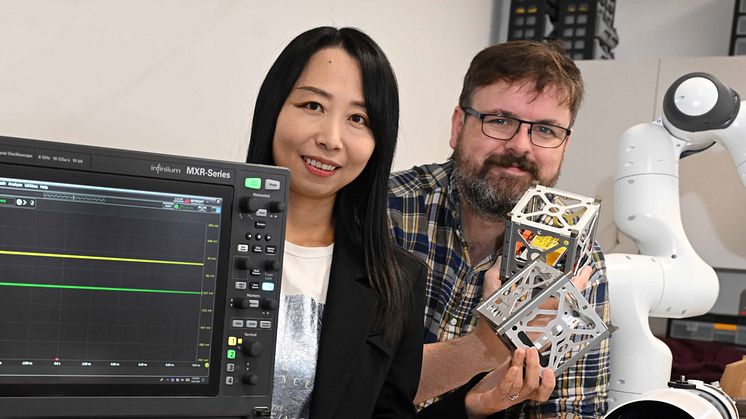
Scientists at Northumbria University have made a breakthrough in developing a new type of ‘microwave amplification by stimulated emission of radiation’ device, known as a maser.
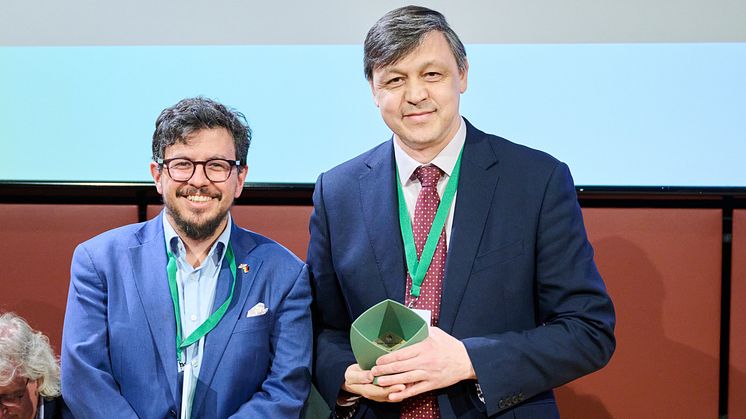
Northumbria University researchers have developed a biodegradable battery, the BioPower Cell, winning the prestigious Green Product Award 2025. This eco-friendly battery uses organic materials, offering a sustainable alternative to conventional batteries, and can ultimately be repurposed as fertilizer, reducing waste.
An energy-efficient cooling system developed by scientists at Northumbria University has been crowned one of the most ground-breaking innovations of the year.
A team of researchers are investigating the impact of retrofitting houses to make them more energy efficient on the health and wellbeing of residents in Newcastle.
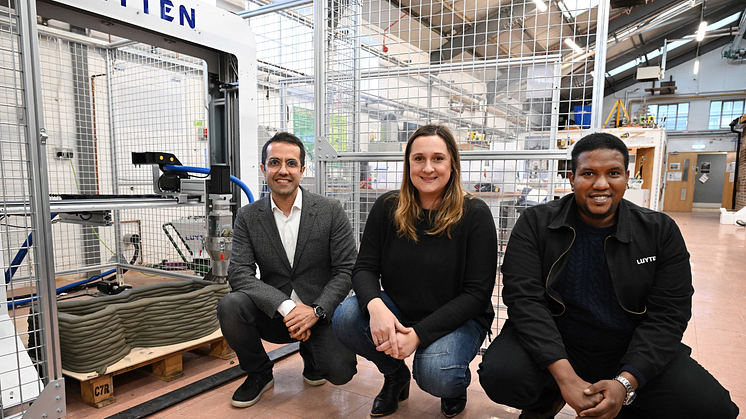
Northumbria University has announced the installation of new cutting-edge 3D construction printing technology. The advanced technology will enable the testing and validation of concrete elements which could be adopted by industry, positioning Northumbria as a leading hub for sustainable construction innovation in the North East.
An innovative programme to develop the next generation of leaders in the renewable energy sector has been highly commended in the national Green Gown Awards.
Northumbria University has announced a multi-million pound investment in its first university-wide high-performance computing facility which will give researchers access to state-of-the-art technology built to handle large scientific datasets at high speeds.
The SAT-Guard project aims to leverage satellite technology to enhance energy management and restore power following extreme weather events. Funded by UK Research and Innovation, it seeks to improve grid resilience and coordination of distributed energy resources across the UK.
Professor John Woodward has been named the North East’s top business person of the year for his work to develop the new £50 million North East Space Skills and Technology Centre at Northumbria University.
Researchers have found a new way to simplify the structure of high-efficiency blue organic light-emitting diodes (OLEDs), which could lead to longer-lasting and higher definition television screens.