Press release —
Northumbria researchers secure four prestigious early career fellowships
Four Northumbria University researchers have been awarded highly competitive fellowships to pursue groundbreaking research projects spanning the humanities, engineering, and social sciences.
The awards – three Leverhulme Trust Early Career Fellowships and one British Academy Postdoctoral Fellowship – are designed to support researchers at the beginning of their academic careers, enabling each scholar to undertake significant original research that will be published and contribute to their respective fields.

Dr Shray Mehter
Dr Shray Mehta from Northumbria’s School of Humanities and Social Sciences has been awarded a Leverhulme Trust Fellowship for his project 'Red Sadhus: Socialist Hinduism in South Asia from 1920 To 1990'.
The research will provide the first comprehensive history of socialist Hinduism in South Asia, examining vernacular socialist thought in political movements led by Hindu religious leaders in Eastern India. By combining previously unseen archives with new oral history interviews, Dr Mehta aims to unearth new forms of Hindu political subjectivities and their impacts on social movements and radical politics.
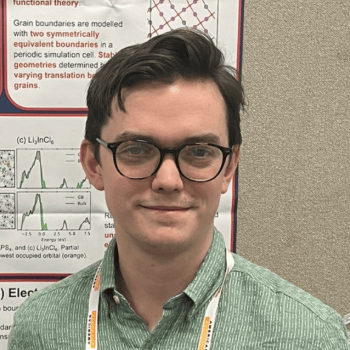
Dr James Quirk
Dr James Quirk from the School of Engineering, Physics and Mathematics will investigate whether defects in solar materials could improve performance through his project 'Turning Defects into Assets: Grain Boundary Inversion in Solar Absorbers'.
Whilst grain boundaries typically reduce the efficiency of solar cells, Dr Quirk's research focuses on antimony selenide, which shows remarkable tolerance to these boundaries. Using advanced simulations, he will explore whether grain boundary inversion – a process that creates electric fields extending the lifetimes of photo-generated charge carriers – could transform how scientists approach defect engineering in solar technology.

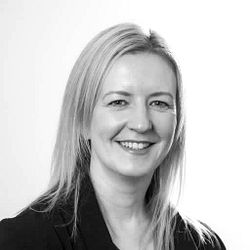
Dr Rhianna Garrett
Dr Rhianna Garrett from the School of Geography and Natural Sciences has secured funding for her project '(Self)categorisation As Resistance: The Refusal of Mixed Ethnic Categorisation'.
Through interviews and photography across five countries – Britain, the US, Singapore, Germany and Bosnia and Herzegovina – Dr Garrett will examine how global mixed ethnic populations resist oppressive ethnic categorisation through self-identification. The research will result in a monograph, journal articles, and a photographic exhibition, creating new academic spaces that centre mixed ethnic experiences.

Dr Aileen Lichtenstein
Dr Aileen Lichtenstein from the School of Humanities and Social Sciences has been awarded a British Academy Postdoctoral Fellowship for 'Feeling Political: How Emotions Shaped German Exile Political Activism 1840–1945'.
Her research will study political exile through the history of emotions, exploring how feelings such as love, loyalty, hope, and loss shaped the activism of German political refugees between 1840 and 1945. By linking the history of emotions with German history, Dr Lichtenstein will examine how exile associations created and manipulated 'emotional templates' to shape refugee activism and belonging.
Professor Louise Bracken, Pro Vice-Chancellor for Research and Knowledge Exchange at Northumbria University, said: "This is a truly outstanding achievement for Northumbria and a testament to the exceptional quality of our early career researchers. To secure four prestigious fellowships in a single round is a fantastic achievement and reflects the strength and breadth of our research environment.
"These fellowships are intensely competitive, so this recognition is particularly significant for Northumbria's growing research reputation. What makes this success even more impressive is the diversity of disciplines represented, from engineering and geography to humanities and social sciences.
"Each of these projects addresses important questions in innovative ways, and I'm delighted that our researchers will have the opportunity to develop their groundbreaking work. This achievement demonstrates that Northumbria is fostering world-class research talent across all areas, and I look forward to seeing the impact of these projects over the coming years."
Both the Leverhulme Trust Early Career Fellowships and the British Academy Postdoctoral Fellowship provide funding for three years.
Find out more about each scheme on the Leverhulme Trust website and The British Academy website.
Topics
Categories
UNIVERSITY OF THE YEAR 2022 (Times Higher Education Awards)
Northumbria is a research-intensive university that unlocks potential for all, changing lives regionally, nationally and internationally.
Two thirds of Northumbria's undergraduate students come from the North East region and go into employment in the region when they graduate, demonstrating Northumbria's significant contribution to social mobility and levelling up in the North East of England.
Find out more about us at www.northumbria.ac.uk
--- Please contact media.communications@northumbria.ac.uk with any media enquiries or interview requests ---