Press release —
Northumbria expert delivers training to help address victim-blaming language
A Northumbria University academic is leading pioneering training to support police forces across the country to tackle victim-blaming language during investigations, with a particular focus on Violence Against Women and Girls.
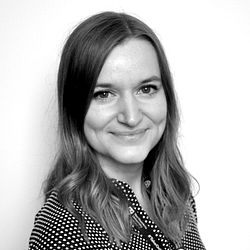
Dr Patricia Canning Pask, Assistant Professor in the School of Humanities and Social Sciences at Northumbria University, is working to deliver 'Language Matters' training to police officers of all ranks, including working with Cumbria Constabulary.
An applied linguist specialising in forensic texts and contexts, Dr Canning Pask's research focuses on the investigation and analysis of language used across the UK justice system, including how blame is placed or deflected through individual and institutional language choices. She has published research on analyses of the witness statements following the Hillsborough Football Stadium Disaster (1989) and the attribution of blame following the Champions League Final in Paris in (2022).
The training with police in Cumbria, funded by Police, Fire and Crime Commissioner David Allen, will make Cumbria Constabulary the second force in the UK to roll out this method to proactively address language concerns and focus on non-blaming communication. The programme covers all crime types with particular emphasis on domestic abuse and sexual violence, which disproportionately affect women and girls.
Dr Canning Pask said: "How language is used in policing and the wider justice system cannot be underestimated, especially when responding to and investigating domestic abuse. The training has been designed to encourage officers to understand the impact on victims and case outcomes of what they say and how they say it, whether in person, on the phone, or in case file reports. Language matters, and by addressing harmful stereotypes and shifting the focus away from victims and on to perpetrators, this training will help build trust and really can make a difference on improving routes to justice for victims and survivors."
The training aims to ensure victims feel supported throughout investigations and that cases are progressed fairly. It was developed by Dr Canning Pask after she began working with South Wales Police on reviewing case files to inform language guidelines for future investigations. The training has also been delivered to staff across Cheshire Constabulary and to the Metropolitan Police service’s media team.
“It really can be as simple as thinking very carefully before using phrases such a ‘just one slap’,” added Dr Canning Pask. “The use of the word ‘just’ immediately minimises the offence being investigated and the impact on the victim. Similarly, when describing what might have led up to an incident, using terms such as ‘toxic relationship’ or describing something as an ‘argument’ can instantly share responsibility for what happened between those involved when, clearly, that may not be the case, particularly with a coercive and controlling abuser.”
Detective Chief Superintendent David Ashton from Cumbria Constabulary, said: “We fully welcome the Language Matters training for our officers and staff. This programme strengthens our commitment to victim-focused policing by enhancing how we communicate in sensitive and challenging situations.
“Building on practical insights, Language Matters ensures our teams are equipped to offer clear, respectful and inclusive support to those affected by crime and anti-social behaviour. Effective communication is fundamental to building trust, and this training will help officers and staff respond with empathy and continued professionalism across all areas of policing.”
Recognition that the words used in communications, written or spoken, can set the tone for an investigation, led the Independent Office for Police Conduct to work with the Crown Prosecution Service, the office of the Victims’ Commissioner for England and Wales and a number of police forces and support organisations across the UK to produce a report on ending victim blaming in the context of violence against women and girls. Dr Canning Pask was invited to contribute to the report, published in 2024, which defines the issues and outlines a set of key principles aimed at helping to tackle them.
In 2023, Dr Canning Pask was one of 10 independent experts appointed to the Truth Recovery Independent Panel to investigate the practices of 'Mother and Baby' Institutions, Magdalene Laundries, and Workhouses in Northern Ireland and the experiences of women and girls between 1922 and 1995. The panel published an interim report in 2024 and is expected to make public its full findings in 2026.
Researchers at Northumbria University combine academic insight with real-world practice and interdisciplinary collaboration to better understand and address gendered violence and abuse.
Topics
Categories
UNIVERSITY OF THE YEAR 2022 (Times Higher Education Awards)
Northumbria is a research-intensive university that unlocks potential for all, changing lives regionally, nationally and internationally.
Two thirds of Northumbria's undergraduate students come from the North East region and go into employment in the region when they graduate, demonstrating Northumbria's significant contribution to social mobility and levelling up in the North East of England.
Find out more about us at www.northumbria.ac.uk
--- Please contact media.communications@northumbria.ac.uk with any media enquiries or interview requests ---