Press release —
Northumbria co-leads study on fairer support for families
A major study co-led by Northumbria University will test whether attachment assessments lead to better and fairer decisions about children’s mental health and safeguarding. The study launched this month and involves 300 families.
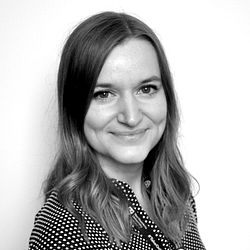
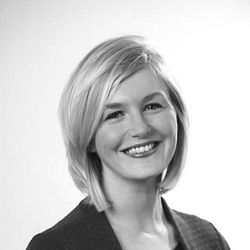
The study is co-led by Dr Sarah Foster from Northumbria University and Professor Robbie Duschinsky from the University of Cambridge, with support from the National Children’s Bureau (NCB), The Motherhood Group and the international Caregiving and Attachment Research and Education (CARE) Collaboration.
Over four and a half years, the study will recruit families in south London with children aged five to eight who are involved with NHS Child and Adolescent Mental Health Services (CAMHS).
Researchers will evaluate the accuracy, fairness, acceptability and cost-effectiveness of attachment assessments and explore whether they improve professionals’ ability to identify both children’s mental health needs and potential safeguarding concerns.
Dr Foster, from Northumbria’s School of Communities and Education, said: “An important aspect of our study is that we won’t only ask whether attachment assessments add anything useful, but also whether they work equally well for all families.
“There are real concerns that these assessments could be unfair to families living in poverty, families from racially minoritised communities, and families of neurodivergent children, for example by mistaking the effects of hardship, cultural differences or a child’s neurodivergence for problems in the relationship. These are often the families already under the most scrutiny from services, and we will be testing this directly.
“We will also be exploring the critical question of how acceptable these assessments are to families. Just as importantly, families won’t simply be taking part in the study; they will be co-producing it with us, shaping everything from how the study is carried out to how our findings are understood and shared. This will make the research meaningful to the people it affects.”
Attachment assessments examine aspects of the relationship between a child and their primary caregivers, including parents, foster carers, grandparents and other responsible adults.
Attachment is currently referenced in CAMHS referral forms, the Common Assessment Framework for children’s services, and NHS and local authority guidance. However, until now, there has been no large-scale study testing whether attachment assessments improve professionals’ ability to identify children who need support.
The study will compare attachment assessments with information collected from families and follow-up NHS records, creating one of the most comprehensive evaluations of attachment assessment to date.
Researchers will study both formal attachment assessment tools and the informal ways practitioners use attachment concepts when making decisions about children and families. They will test whether families’ socioeconomic circumstances, ethnicity or a child’s neurodiversity affect the fairness of those judgments.
The findings could influence how CAMHS, social care services and policymakers assess children’s needs and decide what support families receive.
NCB and The Motherhood Group will recruit and support parents as research partners, co-lead engagement activities and help ensure that the study responds to different cultural contexts and is shaped by families’ experiences.
These parents will contribute to understanding the acceptability of assessments, interpreting responses from participating families and follow-up CAMHS data, and shaping how findings are communicated.
The MASON (Measures of Attachment: Signal or Noise?) study is funded by Wellcomeand begins this month and will run until March 2031.
Professor Robbie Duschinsky, University of Cambridge, said: “Attachment has become a powerful but fiercely contested idea across children’s mental health and social care. Some practitioners see attachment assessments as an essential window into a child’s experiences and needs; others worry that they are being used to draw conclusions about families that the evidence cannot support.
“Remarkably, although these assessments are recommended and at times used in services, no one has yet directly tested whether they actually help identify which children need support. The answer matters enormously: it could change how practitioners spend their time, what help children receive, and how families are understood by the services meant to support them. Families and practitioners deserve to know whether these assessments are helpful or are misdirecting.”
Sandra Igwe MBE, Founder and Chief Executive, The Motherhood Group, said: “When research informs how a child’s relationship with their caregiver is understood, families deserve to have their lives, cultures and circumstances taken seriously. For Black families and other communities whose perspectives are too often overlooked, being heard and understood matters enormously.
“This study offers an important opportunity to examine what attachment measures can and cannot tell us, alongside how families experience those assessments. Through The Motherhood Group’s involvement, we want parents to have a meaningful influence on how the research is carried out, how findings are interpreted and how they are shared. My hope is that this work helps build understanding, strengthens trust and informs support that families experience as fair, respectful and useful.”
Anna Feuchtwang, Chief Executive, National Children’s Bureau, said: “Practitioners use attachment assessments to inform decisions that can have profound consequences for children and families, yet we still know too little about how well those methods work. This research will help policymakers, NHS services and social care services make better-informed decisions. It is particularly important that assessment and support work effectively for children and families who are vulnerable or marginalised, before difficulties reach crisis point or children are placed at risk of harm.
“We look forward to reviewing the findings as they emerge and turning them into practical recommendations which we will use to engage and influence local and national decisionmakers to shape policy and practice that creates better childhoods and builds brighter futures.”
Categories
UNIVERSITY OF THE YEAR (Times Higher Education Awards, 2022)
RESEARCH UNIVERSITY OF THE YEAR (Daily Mail University Guide, 2024)
MODERN UNIVERSITY OF THE YEAR (Daily Mail University Guide, 2024 and The Times and Sunday Times Good University Guide, 2025).
Northumbria is a research-intensive university that unlocks potential for all, changing lives regionally, nationally and internationally.
Two thirds of Northumbria's undergraduate students come from the North East region and go into employment in the region when they graduate, demonstrating Northumbria's significant contribution to social mobility and levelling up in the North East of England.
Find out more at www.northumbria.ac.uk
--- Contact media.communications@northumbria.ac.uk with any media enquiries or interview requests ---